
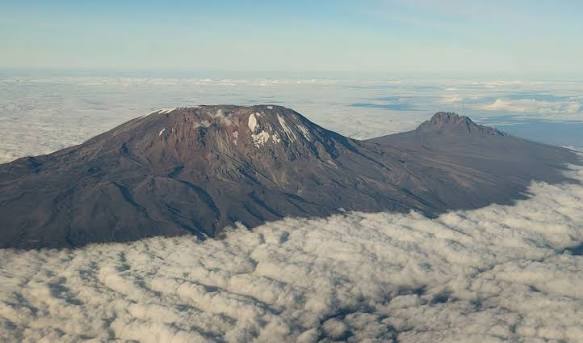
Northern Route • Scenic Wilderness • Summit of Africa Experience
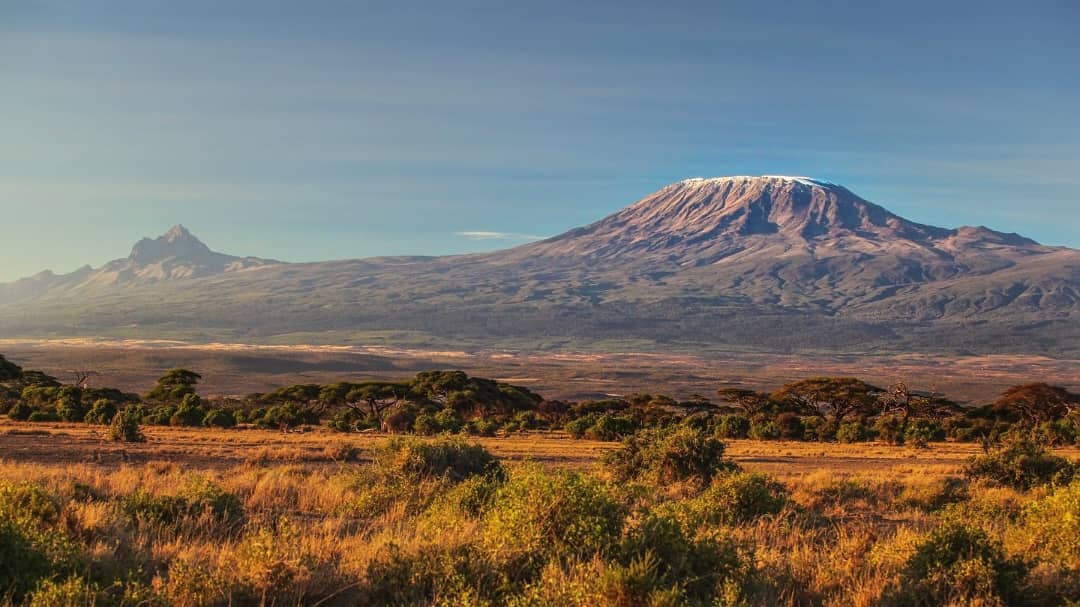
A carefully designed trekking journey to the highest point in Africa—Mount Kilimanjaro (5,895m)—via the peaceful and less-crowded Rongai Route. This route offers a unique experience through untouched northern landscapes, alpine wilderness, dramatic volcanic terrain, and finally the iconic sunrise summit above the clouds.
This Kilimanjaro Rongai Route Adventure combines remote wilderness scenery, gradual acclimatization, and an unforgettable summit experience at Uhuru Peak, Africa’s highest point.
Discover a more exclusive way to climb Mount Kilimanjaro with the Rongai Route—a hidden gem known for its untouched wilderness, panoramic views of the Kenyan plains, and low crowd levels.
Unlike the more popular southern routes, Rongai offers a rare sense of solitude and immersion in nature. The journey traverses remote landscapes, volcanic terrain, and high-altitude ecosystems while maintaining a steady pace that supports successful summit attempts.
Embark on a once-in-a-lifetime adventure to the summit of Mount Kilimanjaro (5,895m) via the remote and scenic Rongai Route. This 7-day trekking experience offers a rare opportunity to explore the quieter northern side of Africa’s highest mountain, far from the busy trails.
From lush rainforest paths to dramatic alpine deserts and glacier-lined summit views, every day reveals a new landscape and a deeper connection to nature. The journey culminates in a breathtaking sunrise at Uhuru Peak, where the vast African plains stretch endlessly below you.
Upon arrival at Kilimanjaro International Airport or Arusha Airport, you will be warmly
welcomed by your professional mountain guide and transferred to your hotel in Arusha.
Arusha is the gateway to Kilimanjaro and a vibrant town surrounded by mountains, coffee
farms, and safari atmosphere.
In the evening, your guide will conduct a detailed briefing covering:
Trekking overview and safety procedures
Gear check and preparation
Route explanation and expectations
Overnight: Comfortable hotel in Arusha
Rest and prepare for the adventure ahead.
After breakfast, drive to Marangu Gate for registration, then continue to Nale Moru
village—the starting point of the Rongai Route.
Begin your trek through:
Rural farmlands
Pine forest trails
Gentle mountain ascent
This is a peaceful and less crowded section of Kilimanjaro.
You may encounter:
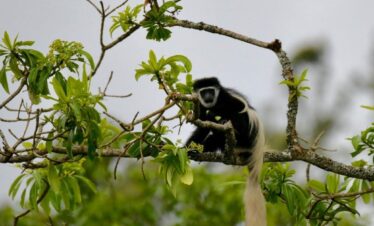
Black-and-white colobus monkeys
Unique bird species
Changing vegetation zones
Arrive at Simba Camp located at the edge of the moorland zone with wide views toward the
Kenyan plains.
Hiking time: ~3 hours
Altitude: 2,650m
Overnight: Simba Camp
First night on the mountain under the African sky.
Today the trail gradually climbs into higher moorland terrain with stunning views of Mawenzi
peaks.
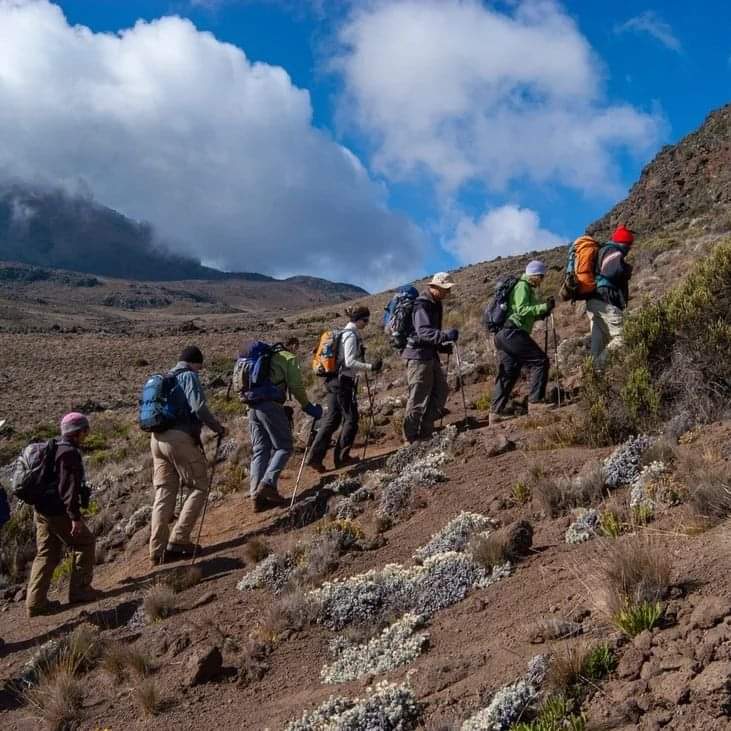
Enjoy a steady ascent through open landscapes and volcanic terrain.
Stop at Second Cave for rest and lunch while enjoying panoramic views of:
Kibo peak
Ice fields and alpine valleys
Continue hiking toward Kikelewa area, where the scenery becomes more dramatic and
remote.
Hiking time: 6–7 hours
Altitude: 3,600m
Overnight: Kikelewa Caves Campsite
A deeper immersion into Kilimanjaro’s wilderness.
Ascend into alpine desert landscapes with dramatic volcanic formations.
Pass through Lava Tower area for acclimatization before descending into the lush Barranco
Valley, known as the “Garden of Senecios”.
This is one of the most scenic sections of the entire mountain.
Expect:
Giant Senecio trees
Lobelia plants
Views of towering cliffs and glaciers
Arrive at Barranco Camp, one of the most beautiful camps on Kilimanjaro.
Hiking time: ~5 hours
Altitude: 3,950m
Overnight: Barranco Camp
A magical landscape surrounded by towering mountain walls.
Begin climbing the famous Barranco Wall an exciting and scenic scramble.
Continue across alpine desert terrain between Mawenzi and Kibo peaks.
This section feels remote, quiet, and powerful as you approach the final summit zone.
Arrive at Kibo Camp, located at the base of the summit route.
Hiking time: 4–5 hours
Altitude: 4,703m
Overnight: Kibo Camp
Rest and prepare for the summit push.
At midnight, begin your final ascent under the stars.
Slowly climb through volcanic scree toward Gillman’s Point (5,681m), then continue along
the crater rim to Uhuru Peak (5,895m)—the highest point in Africa.
At sunrise, experience:
Golden light over the African continent
Glaciers and ice cliffs
Endless horizon views
The emotional achievement of reaching the summit
After time at the top, descend back to Kibo for rest and continue to Horombo Camp.
Hiking time: ~12–14 hours
Overnight: Horombo Camp
The most powerful and unforgettable moment of the journey.
Continue descending through:
Moorland zones
Rainforest trails
Rich vegetation and wildlife sounds
Reach Marangu Gate where you will receive your official summit certificate.
Your vehicle will be waiting for transfer back to Arusha.
Celebrate your achievement with a well-deserved rest.
Hiking time: ~6 hours
End of an extraordinary mountain journey.
- Airport Transfers (Kilimanjaro International Airport / Arusha)
- Hotel Accommodation in Arusha (Before & After Trek) Comfortable lodge or hotel with breakfast included
- Professional Certified Mountain Guides
- Experienced, English-speaking Kilimanjaro guides with wilderness training
- Full Mountain Crew Support Porters, cook, and support team to carry equipment and prepare meals
- All Park Fees & Government Taxes, Kilimanjaro National Park entry, camping fees, rescue fees
- Camping Equipment, Quality mountain tents, sleeping mats, dining tent, and camping gear
- Nutritious Meals on the Mountain, Breakfast, lunch, and dinner prepared fresh daily
- Drinking Water During Trek, Clean, treated water provided throughout the climb
- Safety Equipment, Pulse oximeter, oxygen cylinder, first aid kit
- Daily Health Monitoring, Guides check altitude adaptation and physical condition
- Summit Certificate, Official Kilimanjaro certificate upon successful ascent
- International Flights to Tanzania
- Tanzania Visa Fees
- Travel Insurance (Mandatory for Trekking), Must cover high-altitude trekking up to 6,000m
- Personal Trekking Gear(e.g., boots, sleeping bag, clothing – available for rent if needed)
- Tips for Guides, Porters & Crew(Recommended and customary on Kilimanjaro)
- Alcoholic & Soft Drinks, Outside of provided meals
- Personal Expenses, Souvenirs, laundry, additional hotel nights
- Optional Add-Ons, Such as private toilet, extra porter, or safari extensions
How difficult is the 7-day Kilimanjaro Rongai Route?
The Rongai Route is considered moderate to challenging, making it suitable for beginners with good fitness. Its gradual ascent allows better acclimatization compared to steeper routes, increasing your chances of reaching the summit.
The Rongai Route has a high summit success rate, especially on 7-day itineraries, due to its steady elevation gain and effective acclimatization profile.
This itinerary takes 7 days, which is ideal for proper altitude adaptation and a safer, more enjoyable trekking experience to Uhuru Peak (5,895m).
The best months are January to March and June to October, when the weather is drier and visibility is clear. The Rongai Route is also a good option during the rainy season due to its northern location.
No technical climbing experience is required. However, you should have good physical fitness and basic hiking experience to complete the trek comfortably.
The Rongai Route approaches Kilimanjaro from the north near the Kenyan border, offering fewer crowds, unique wilderness scenery, views of the Kenyan plains, and a quieter, more remote trekking experience.
You will stay in comfortable mountain tents at designated campsites during the climb, and in a hotel in Arusha before and after the trek.
Yes, altitude sickness is a risk on any high-altitude climb. This itinerary is designed for gradual acclimatization, and guides monitor your health daily to ensure safety.
Essential items include warm layered clothing, hiking boots, a sleeping bag, headlamp, and personal gear. A full packing list is usually provided before your trip.
Preparation should include regular cardio training such as hiking, running, or cycling, along with strength and endurance exercises. Practice hikes with elevation gain will significantly improve your chances of reaching the summit.